
The Bottleneck in Secondaries Is Not Judgment. It Is Everything Before Judgment Starts.
In secondaries, the price decision is still human. The partner still decides where conviction sits, how much risk to underwrite, and what discount is required. But before that judgment can begin, the team has to turn a messy data room into something a model can trust.
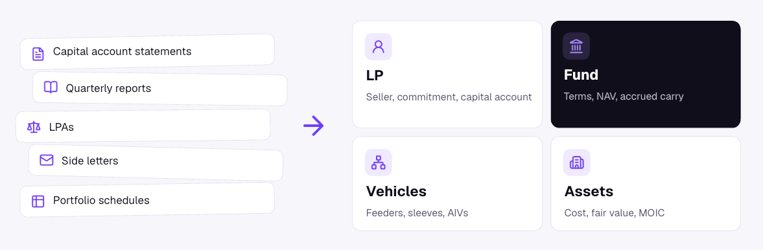
That is where the process still breaks. A fund data room arrives with capital account statements, quarterly reports, audited financials, LPAs, side letters and portfolio schedules. The information is not only unstructured, it is reported at different levels of the fund family. One figure may refer to the total fund. Another may refer to a sleeve. A feeder may sit above a master. Accrued carry may be visible only in a footnote. A schedule of investments may not bridge cleanly to the capital account statement. None of this is exotic. It is the daily work of secondaries teams.
The problem is that this work happens at the worst possible moment. A live process is compressed. The buyer needs to move quickly. Analysts spend days before the real underwriting work can start: classifying files, extracting positions, resolving fund structures, reconciling values and checking whether a number is actually the number they should price from.
Kruncher was built for this layer. We transform a fund data room into a reviewed workbook that can feed the existing cash-flow model. The model remains yours. The underwriting judgment remains yours. What changes is the quality, speed and traceability of the inputs.
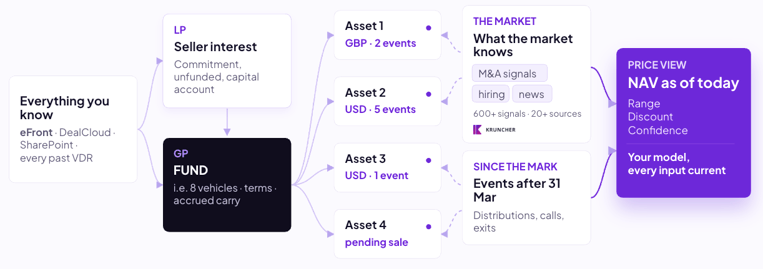
The key design principle is simple: structure first. Before extracting a figure, Kruncher resolves the fund family. It reads the LPA and related documents to understand master-feeder structures, parallel funds, AIVs, sleeves, seller positions and basis of presentation. Only then does the system extract, derive and validate the values that enter the workbook.
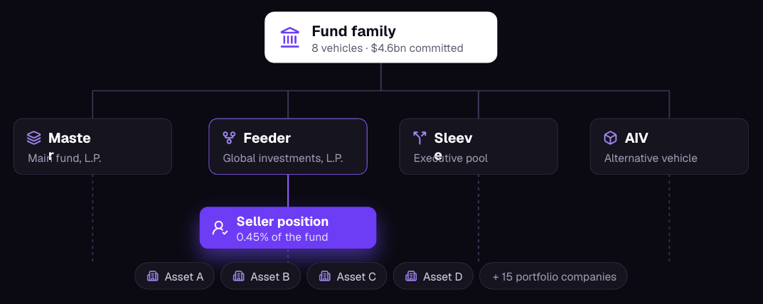
This matters because a number without structure can be dangerous. A fair value reported at total-fund level may not be the value of the sleeve the buyer is acquiring. A combined statement may aggregate vehicles that should not be added again. A capital account may be shown gross of accrued carry, while the buyer only owns the net economics. In each case, the extracted number can look correct while the investment input is wrong.
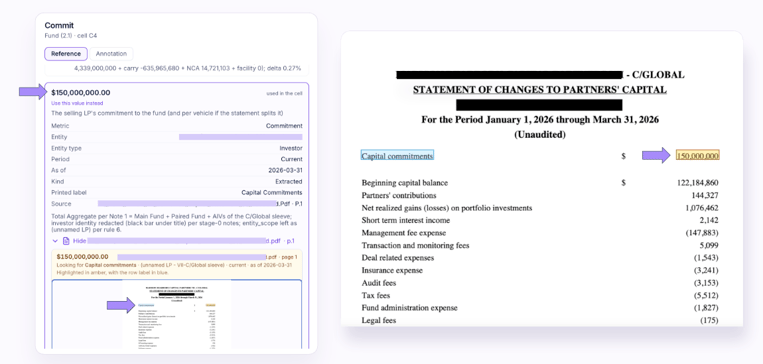
Kruncher is designed not to hide that uncertainty. Every value is extracted, derived, missing or flagged for review. Each cell carries its source file, page and coordinates. Alternative candidates remain visible. If a quarterly report and a financial statement disagree, the preferred value is shown together with the alternatives and the reason one was selected. The reviewer can overrule the system, add an annotation and preserve the audit trail.
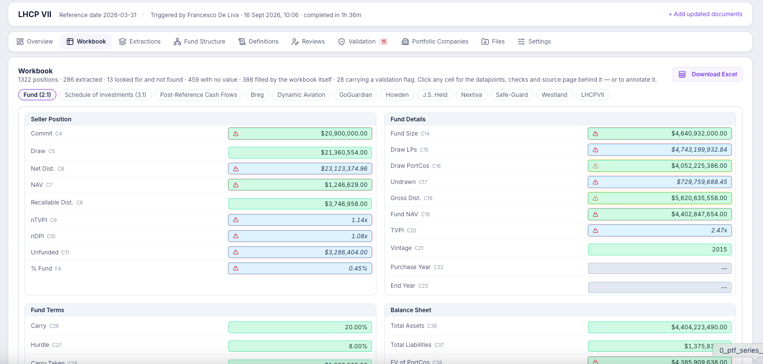
The result is speed with control. One fund can be processed in about an hour. Multiple funds can run in parallel. In recent tests, ten funds were processed inside ninety minutes, while maintaining a human-in-the-loop workflow and extraction accuracy above 95 percent on annotated samples. The point is not to remove review. The point is to point review to the cells that matter.
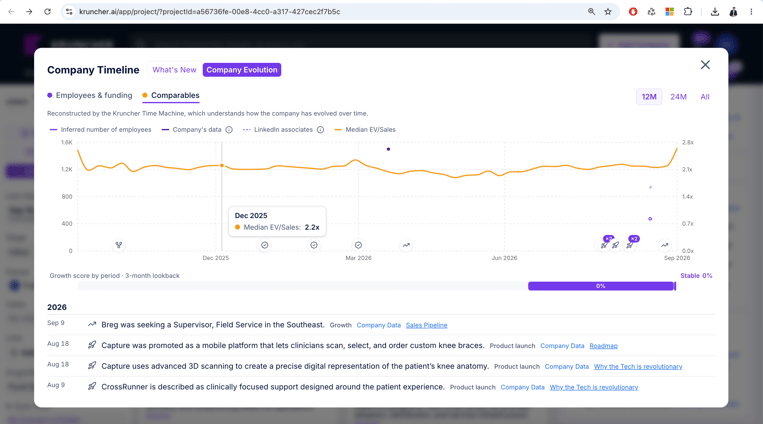
The next step is more powerful: Kruncher does not stop at the data room. Once the underlying companies are resolved, Kruncher brings in current company intelligence. Hiring activity, leadership changes, web traffic, product reviews, funding events, M&A signals, competitive movement and comparable evolution can all be mapped after the reference date. If the GP mark is from March and the buyer is bidding in September, the team can see what moved in between.
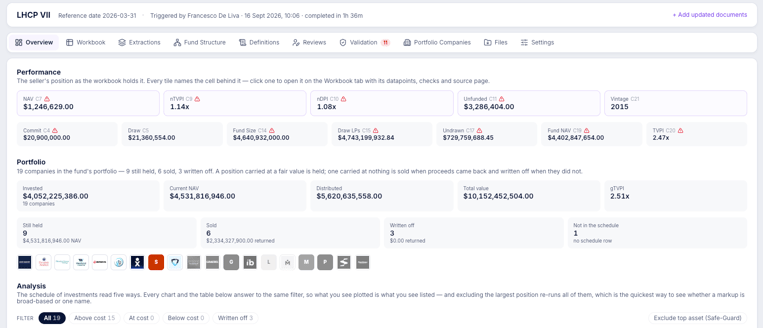
That gives secondary investors a live view of the portfolio, not just a PDF snapshot. At fund level, they get a reconciled workbook. At asset level, they get current context. At portfolio level, they can aggregate exposure, concentration, risk flags and post-reference-date events. The secondary team can still apply its own discount, scenarios and bid strategy, but the record underneath is cleaner, faster and more current.
This is also why the build-versus-buy question should be reframed. Many sophisticated firms can build AI tools internally. The hard part is maintaining the ingestion layer when reporting formats, manager behavior, model choices, prompts and templates keep changing. Kruncher is not asking teams to stop building. It is asking them to stop maintaining the part of the stack that turns confidential, messy documents into structured, source-linked data.
For large institutions, deployment can match the risk posture: client-cloud deployment, approved model whitelists, segregated private data, configurable definitions and API-first access. The output is not a destination. It is an infrastructure layer the firm can call from its own systems.
The simplest way to test it is also the fairest one: send one fund you have already priced. Kruncher returns the workbook, source provenance, validation flags and asset-level view. Then compare it against your own output. In secondaries, judgment still wins the deal. Kruncher helps judgment start sooner.
Kruncher is the AI intelligence platform for private markets. ISO 27001, SOC 2 Type 2, and GDPR certified. Trusted by institutional investors across three continents.